Two key requirements for many industrial use cases are transmission time (also referred to as latency) and message reliability. As described in the subtopic “Performance Testing Parameters”, transmission time refers to the time interval between the transmission of the first byte of a message at the source and the arrival of the last byte at the target. Packet reliability refers to the percentage of messages whose transmission time falls within a specified limit.
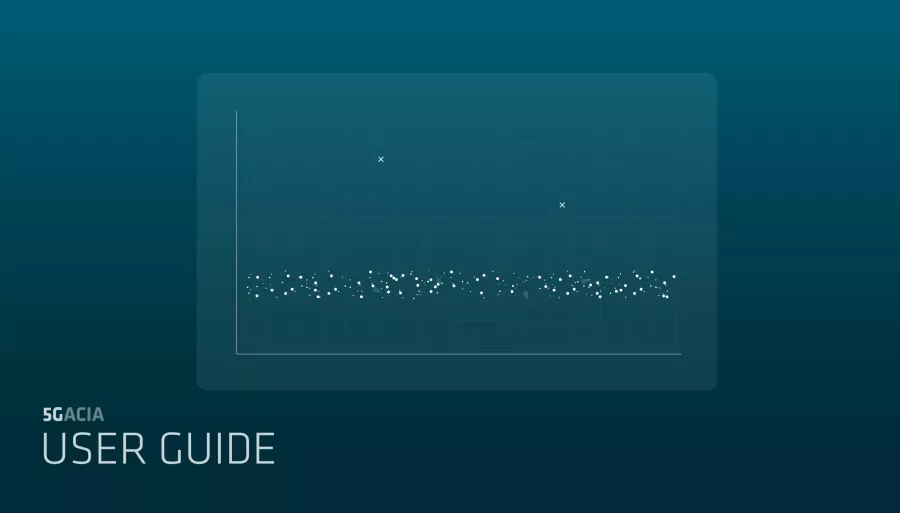
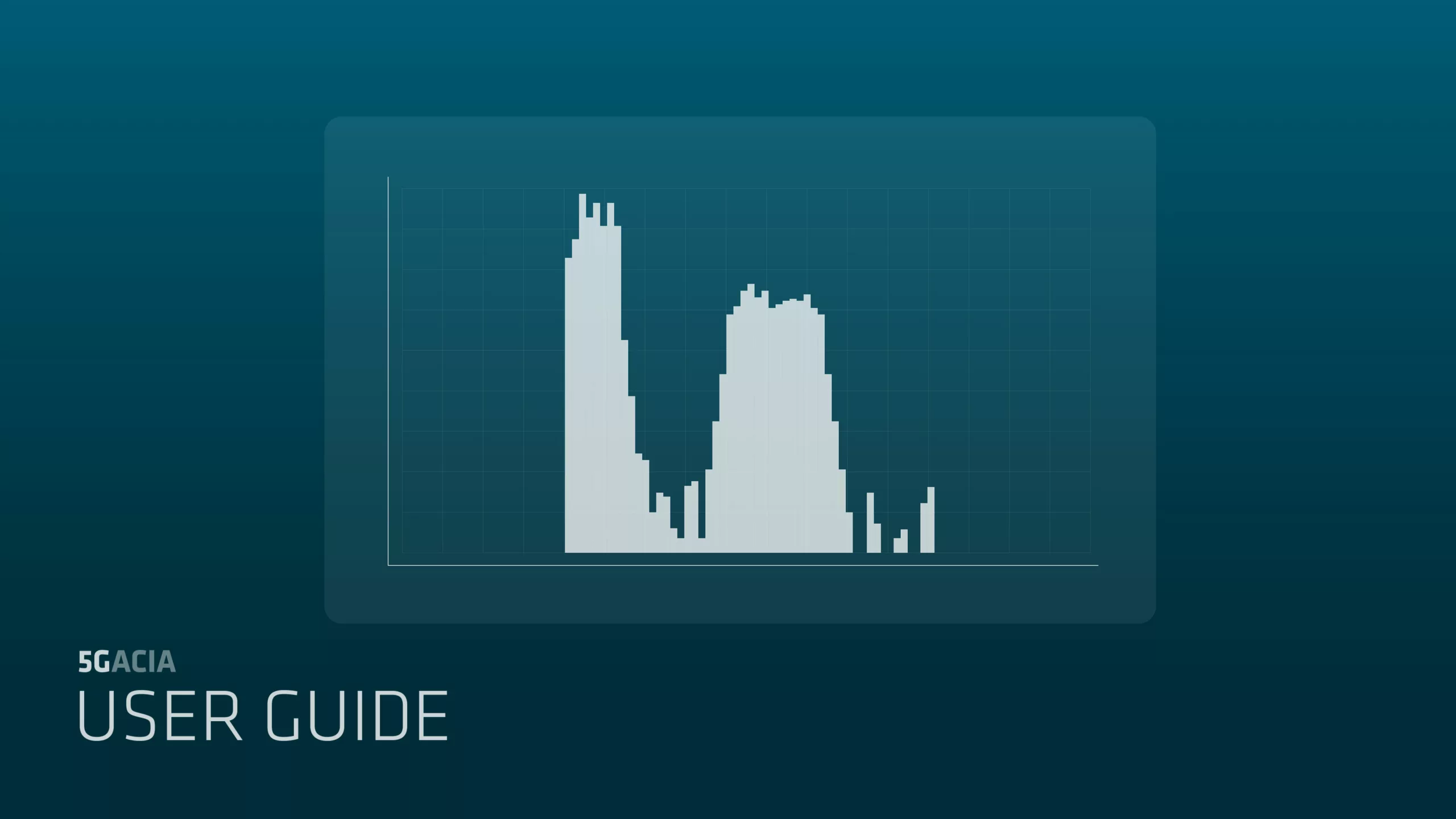
The arrival of packets transmitted or received through the 5G system is not deterministic but follows a statistical distribution and may include outliers, as explained in the subtopic “Transmission Time Problems and Outliers in 5G Networks: Contributions, Outliers, and Considerations for End Users”. An example of such a distribution is shown in the figure below. Therefore, stating transmission time as a single fixed value is only accurate if it accounts for 100% of all packets, including all outliers. For this reason, transmission time should instead be expressed as the time within which a certain percentage of packets arrive. Typically, the closer this percentage is to 100%, the higher the corresponding transmission time. For example, 99.9% of packets might arrive within 6 ms, whereas 99.999% might arrive within 10 ms.
This relationship between transmission time and reliability must be measured for each specific combination of a 5G system and user equipment (UE), as well as for specific packet sizes in both uplink and downlink directions. Conversely, if an application requires a certain level of reliability, this relationship can help determine the maximum latency that can be guaranteed for that packet reliability.
Figure 1: Two examples of transmission time shown as a histogram with respect to the number of messages, where the 95th percentile (P95) is indicated, i.e., 95% of the messages have a transmission time below this value. In both a) and b), UDP packets are used for testing. Scenario a) shows uplink transmission of 76-byte packets, while scenario b) shows downlink transmission of 66-byte packets. Different 5G systems were used in each case. (Source: ifak)
As illustrated in the figure above, it is important to emphasize that transmission time always includes some degree of jitter. Even if the distribution is bounded by a value, e.g., 10 ms, this does not mean every message arrives exactly at 10 ms. Instead, arrival times may range anywhere between, for instance, 3 ms and 10 ms. This variation can pose challenges if the application in question is sensitive to jitter.